
“Dracula” (1897) is the novel that defined the modern vampire. It is the story of a centuries-old nobleman from Transylvania who travels to Victorian London to feed — and of the small circle of friends, led by the Dutch doctor Abraham Van Helsing, who hunt him. Behind the fangs and the castle lies a book that is really about fear: fear of the foreign, fear of desire, and fear of the blood running beneath respectable life.
This guide has the Dracula themes explained plainly: how the novel was written, what the vampire represents, why the story still frightens readers, and how its structure — letters, diaries, phonograph records — is essential to the horror.
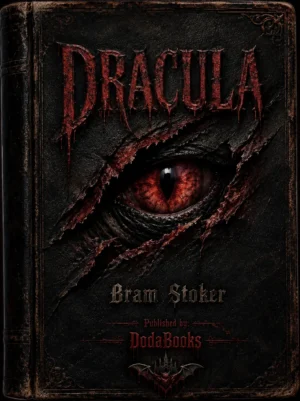
🩸
Dracula
The 1897 novel that made the vampire a legend — decoded: the themes, the symbolism, and why a Victorian blood-count still terrifies.
Bram Stoker
Gothic Horror
| Author | Bram Stoker |
| Published | 1897 (epistolary novel) |
| Genre | Gothic horror, vampire fiction |
| Setting | Transylvania, then Victorian London |
| Key figure | Count Dracula — the undead vampire |
| Legacy | Codified the modern vampire; one of the most adapted horror novels ever written |
🧛 What is Dracula about?
It begins with Jonathan Harker, a young English solicitor, travelling to a remote castle in Transylvania to finalize a property sale for a client — Count Dracula. Harker soon realizes his host is dangerous: the Count crawls down walls, has no reflection, and keeps his own identity hidden behind tales of “the Szekelys.” Harker barely escapes.
Dracula meanwhile travels to England by ship, bringing with him boxes of Transylvanian soil so he can rest in a homeland made foreign. In London he begins feeding on Lucy Westenra and Mina Harker, the women at the centre of the story. The rest of the novel is a chase: Van Helsing and his “Crew of Light” — Jonathan, Mina, Lucy’s suitors Jack Seward, Arthur Holmwood, and Quincey Morris — tracking the vampire to destroy him and save Mina.
👑 What does Dracula represent?
Dracula is a monster built from what frightened his readers. Everything about him refuses easy boundaries: he is both living and dead, both human and animal, both a nobleman and a predator. He crosses from a far-off East into the heart of the Empire, and he feeds not on horror but on respectable people.
The Count is usually read as the “foreign Other” — the aristocratic invader entering Victorian England. But he functions on several levels:
What he represents: repressed desire returning; a predatory aristocracy in a democratic age; the colonial fear of an outsider arriving from abroad. Where he appears: in the castle as a host who is secretly a predator; in London as an immigrant bringing his foreign soil; and always at night, when the respectable world sleeps.
🩸 Blood, desire and Victorian anxiety
The most famous theme of Dracula is the way blood carries meaning. Feeding is seduction: the bite is a kiss, the victim is “visited” at night, and the intrusion is also a pleasure. Stoker writes Lucy’s decline as a fatal illness — but the text makes plain that the invasion is erotic.
Victorian readers were told that respectable women had no desires. Dracula quietly argues otherwise, and the novel’s fear is the fear of that repressed impulse returning. That is why the vampire, not the wolf or the ghost, has survived so long: he is the only monster who wants you, and he makes you want him back.
🔬 Science, modernity and superstition
The battle against Dracula is also a battle between old and new knowledge. The crew fights him with telegraphs, typewriters, shorthand, phonograph records, blood transfusions, and careful documentation. Against that modern toolkit stands Van Helsing, who uses old weapons — crosses, garlic, a sacred wafer — alongside the newest medicine he can find.
The point is not that superstition wins. The point is that the modern world needs something it has neglected: an openness to what its certainties cannot explain. The novel’s extraordinary structure — the story told through letters and records — makes the reader part of the investigation, assembling evidence the way a courtroom would. Horror becomes evidence; the book makes us the detective and the witness at once.
🏰 Why is Dracula a Gothic novel?
The Gothic tradition gives Dracula its castle, its ruins, its night, and its terror of the sublime — but Stoker moves the Gothic into the present. The castle is ancient; the modern world is the fragile thing being invaded. Lucy’s transformation in her tomb, full of mock-wedding symbolism, is as Gothic a scene as any in the tradition.
For readers who want more of the gothic’s pull, the supernatural romance of The Phantom of the Opera trades a castle for an opera house and a vampire for a masked genius — length for length, lover for lover, it is Dracula’s closest cousin in the genre. Both novels pit a woman between a normal suitor and a monstrous one who claims to love her.
❓ Frequently Asked Questions
What is Dracula about?
A Transylvanian count travels to Victorian London to feed on the living, and a group led by Dr. Van Helsing hunts him. It is told through diaries, letters, and phonograph records.
What does Dracula represent?
He represents a cluster of Victorian fears: the foreign invader, repressed sexual desire, and the return of everything respectable society tried to hide. His bite is the intrusion.
Is Dracula a gothic novel?
Yes. It uses the Gothic toolkit — a castle, night, ruins, a sublime landscape — but moves it into modern London and subjects it to modern science. That combination is the novel’s signature.
Who kills Dracula?
Van Helsing and the “Crew of Light” — Jonathan and Mina Harker, Seward, Holmwood and Quincey Morris. Morris delivers the fatal stroke; the crew destroys the vampire and frees Mina.
Why is Dracula told through diaries and letters?
The epistolary form turns horror into evidence and the reader into a detective. It also mirrors the modern obsession with documentation — the very tools the crew uses to hunt him.
Did Dracula invent the vampire?
No. Vampire tales existed in folklore and earlier fiction, including John Polidori’s “The Vampyre” (1819) and Sheridan Le Fanu’s “Carmilla” (1872). Stoker’s novel codified the modern version.
🎯 Key Takeaways
- The vampire is the fear of desire. Dracula wants his victims, and they partly want him; that is what makes him unlike the wolf or the ghost.
- The foreigner as predator. The Count is the aristocratic invader entering England, carrying his own earth with him.
- Modernity meets the old magic. Telegraphs and surgeons fight alongside crosses and garlic — and both are needed.
- Structure is part of the horror. Documents, not narration, make the reader part investigator, part witness.
- It built the modern vampire. Nearly every vampire since descends from this one book.
The bottom line: Dracula endures because it is less about a blood-sucking monster than about the fear of being invaded — in body, in blood, and in desire.
Related reading: if you’re following the gothic thread, our guide to The Phantom of the Opera pairs the vampire’s obsession with a masked genius, and The Picture of Dorian Gray, explained shows the Gothic moving indoors. For the ancestor of the “monster who wants you” idea, see our King in Yellow guide.
📚 Read Dracula
Get Dracula at DodaBooks
Stoker’s novel is a long, layered chase through diaries and letters — a clean, well-formatted text makes the investigation far easier to follow.
- 📖 Complete text, carefully formatted for any e-reader
- ✨ Crisp typography and chapter navigation
- 🚀 Instant download, DRM-free EPUB
- 🔍 Ready to read on phone, tablet, or reader app